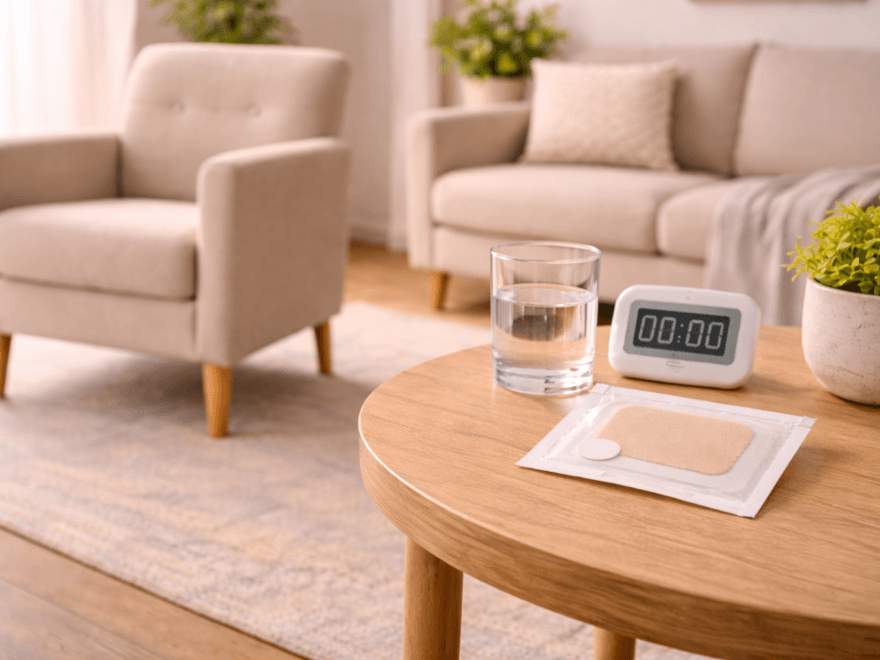
If you’re looking for a balance patch for seniors, the goal usually isn’t anything extreme.
It’s about everyday confidence:
- feeling steadier walking around the house
- more confidence on stairs
- less wobble when turning or stepping sideways
- safer movement during daily tasks
(Results vary.)
The most important truth is this:
Balance improves best with small daily practice.
Not big workouts.
Not complicated plans.
This post gives a simple 5-minute routine designed for older adults, plus an easy way to track progress without guessing.
Disclaimer: This content is for general educational purposes and is not medical advice. If you (or a loved one) have frequent falls, dizziness, new weakness, numbness, or sudden changes in balance, consult a healthcare professional. Use a chair/counter for support during any balance practice.
Quick start
- Balance basics + more routines: Balance Patch Hub →
- New to patches? Start Here →
- Shop: https://mypatchworks.com
- Pricing / sample options: https://mypatchworks.com/product
The safest way to do balance practice (for seniors)
Before the routine, set up safety:
✅ Stand near a sturdy counter, heavy chair, or wall
✅ Wear shoes or go barefoot (avoid slippery socks)
✅ Keep the space clear (no rugs or clutter)
✅ Move slowly—no rushing
✅ Stop if you feel dizzy or unsteady
This routine is about consistency and confidence, not pushing limits.
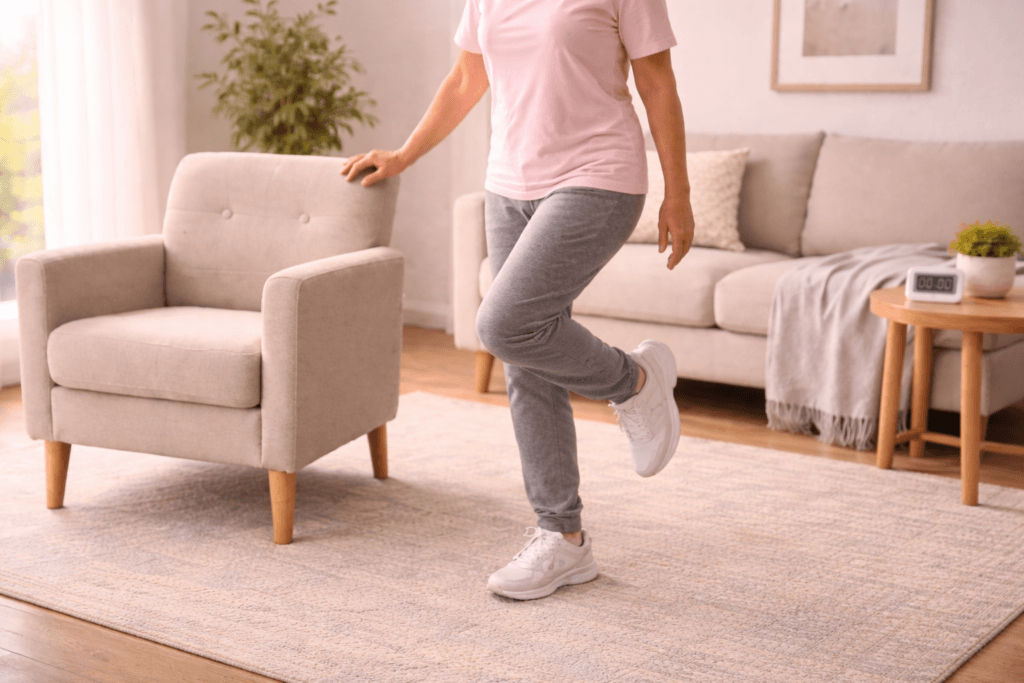
The simple 5-minute daily balance routine (senior-friendly)
Do this once per day.
Minute 1: Posture + breathing reset (60 seconds)
- Stand tall
- Lightly hold a counter/chair if needed
- Take 6 slow breaths, longer exhale than inhale
This calms the nervous system and improves control.
Minute 2: Weight shifts (60 seconds)
- Feet hip-width apart
- Slowly shift weight left → center → right → center
- Keep shoulders relaxed
- Light fingertip support is okay
This builds steadiness without strain.
Minute 3: Heel-to-toe rocking (60 seconds)
- Hold support
- Slowly rise onto the balls of your feet → lower down
- Then lift toes slightly → lower down
- Smooth and controlled
This supports ankle stability, which is a big part of balance.
Minute 4: March in place (60 seconds)
- Hold support
- Slow marching, one knee at a time
- Keep posture tall
- Smooth steps
This trains balance during movement, not just standing.
Minute 5: Single-leg support practice (60 seconds)
This is the most important (and most adjustable).
- Hold support
- Shift weight to one foot
- Lightly lift the other heel (or toe) for 5–10 seconds
- Switch sides
- Repeat until the minute is done
If lifting a foot is too much, start by simply shifting weight and keeping both feet down.
How often should seniors do this routine?
Best results come from:
✅ daily practice
✅ same time each day (easy to remember)
Even 5 minutes done consistently beats 30 minutes done once a week.
How to track progress (simple and motivating)
For 7 days, track these 3 things (15 seconds per day):
- Steadiness rating (1–10): ___
- Wobble today: low / medium / high
- Confidence walking today (1–10): ___
Optional:
- Any “near slips”? yes/no
- Energy level (1–10): ___
You’re looking for trends — not perfection.
What “progress” usually looks like (realistic)
Progress may show up as:
- less hesitation standing up or turning
- smoother steps in the kitchen or bathroom
- more confidence on stairs (with support)
- less wobble when shifting weight
(Results vary.)
Small improvements that repeat are wins.
How a balance patch fits (routine-first)
If you’re using a balance-support patch, the best approach is to pair it with this 5-minute routine.
Why?
Because the routine makes progress measurable.
Learn more here:
Bottom line
For seniors, the best balance routine is:
- simple
- safe
- repeatable
- trackable
Start small and repeat it daily. That’s the secret.
Next steps:
Disclaimer: This content is for general educational purposes and is not medical advice. Results vary by person.