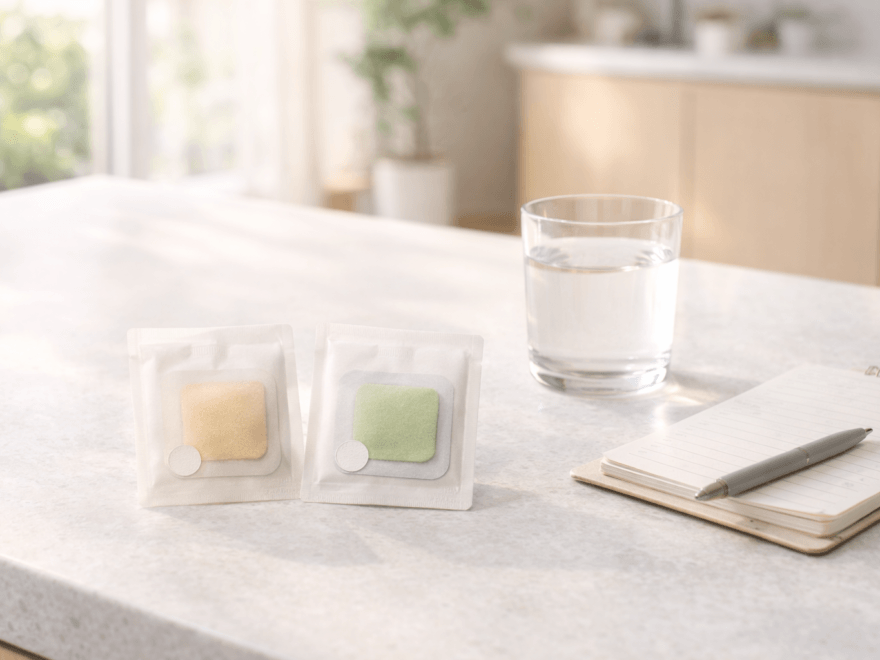
If you’re new, the hardest part isn’t buying patches.
It’s deciding what to start with.
Most people don’t need a complicated stack.
They need a simple combo that:
- helps them feel better day-to-day
- supports sleep at night
- reduces overwhelm
- is easy to repeat consistently
That’s why the most common beginner stack is:
Calm + Sleep
(Stress support + sleep support)
This post explains why it works for so many people, how to use it for 7 days, and what to adjust next (results vary).
Disclaimer: This content is for general educational purposes and is not medical advice. Patches aren’t intended to diagnose, treat, cure, or prevent disease. Results vary by person.
Quick start
- Full beginner path: Start Here →
- Calm routine: Stress Relief Patch Hub →
- Night routine: Sleep Patch Hub →
- Shop / Sample Pack: https://mypatchworks.com/pricing
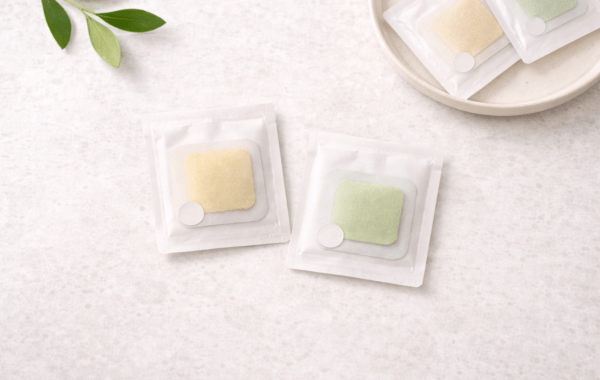
Why “Calm + Sleep” is the best beginner stack
Because most people’s “main problem” is actually a loop:
- stress makes sleep worse
- poor sleep makes stress feel worse
- both make energy, mood, and focus harder
So when you improve calm + sleep, a lot of other things improve indirectly.
That’s why this stack works well even if your “main goal” is:
- energy
- mood
- focus
- recovery
You’re strengthening the foundation first.
The simplest 7-day beginner routine (Calm + Sleep)
Step 1 — Choose a consistent window
You’re aiming for repeatability, not perfection.
A simple approach:
- Calm support: daytime (especially midday or late afternoon)
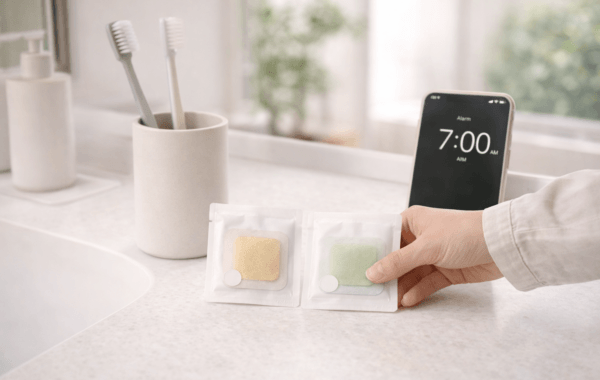
- Sleep support: evening / bedtime routine window
Use your hub guides for timing and routine ideas:
Step 2 — Keep placement consistent (and rotate gently)
Consistency helps you judge results.
- pick a comfortable placement
- avoid high-friction zones (waistbands, tight seams)
- rotate spots slightly so skin stays happy
If you have sensitive skin:
Step 3 — Run the exact same routine for 7 days
No changing stacks daily.
No adding 5 other products at the same time.
Your goal is a clean test so you can actually read the results.
What to track (the 15-second daily tracker)
Track these 3 signals for 7 days:
1) Stress/tension (1–10)
How tense do you feel overall today?
2) Sleep quality (1–10)
How did your sleep feel last night?
3) Wake-ups
0 / 1–2 / 3+
Optional bonus:
- How fast did I wind down? fast / medium / slow
After a week, patterns are usually clearer than day-one feelings.
What “progress” usually looks like (realistic)
Instead of “everything changed,” you might notice:
- fewer stress spikes
- easier wind-down at night
- fewer wake-ups
- waking up feeling slightly more restored
- better mood because you’re less depleted
(Results vary.)
Small changes that repeat are wins.
What to adjust next (after the first 7 days)
After your first week, choose one next move:
Option A: Keep the same stack another week
If you saw improvement, stay consistent and let it compound.
Option B: Adjust one variable
If results were unclear, adjust ONE thing:
- timing
- placement
- wind-down habit (dim lights, no late scrolling, etc.)
Option C: Add a third goal (only if needed)
If calm + sleep is improving but you still have a loud daytime issue, consider adding:
- Energy (if you’re sluggish) →
- Focus (if you’re scattered) →
- Mood (if heavy days persist) →
- Recovery (if you train) →
Add one goal at a time so you can still track cleanly.
The easiest way to start (sample pack)
If you want to try this beginner stack without committing to full packs first:
Then run the same 7-day tracking method.
Bottom line
The best patch stack for beginners is usually the one that builds the foundation:
Calm + Sleep
Stress support + sleep support.
Run it for 7 days, track a few signals, then refine one variable at a time.
That’s how you get real clarity — without overwhelm.
Next steps
Disclaimer: This content is for general educational purposes and is not medical advice. Results vary by person.