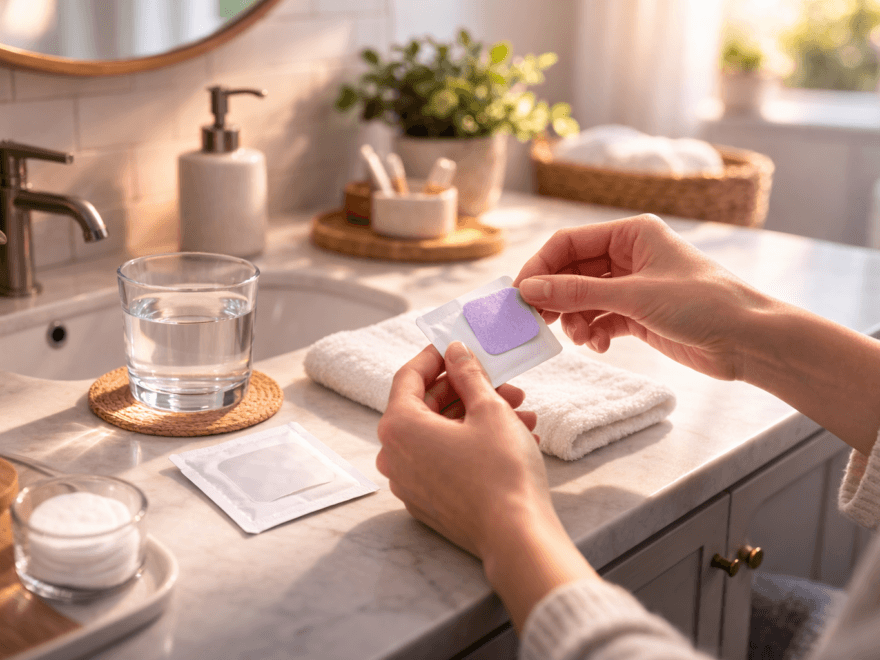
If you’re new to sleep patches, it’s normal to ask:
How long should you wear a sleep patch?
Most people don’t want complicated instructions.
They want a simple, safe approach that fits real life and helps them stay consistent.
This guide covers:
- common wear-time ranges
- timing tips (when to apply)
- removal best practices
- what to track for 7 nights so you can see trends (results vary)
Disclaimer: This content is for general educational purposes and is not medical advice. Always follow the official product instructions. Results vary by person.
Quick start
- Sleep routines + basics: Sleep Patch Hub →
- New to patches? Start Here →
- Shop: https://mypatchworks.com/product
The short answer: most people wear sleep patches overnight
For many sleep routines, the most common approach is:
✅ apply during your wind-down
✅ wear through the night
✅ remove in the morning
But the “right” wear time can depend on:
- your comfort
- your skin sensitivity
- the brand’s instructions
- your sleep schedule (shift work, early wakeups, etc.)
Always prioritize the product’s official guidance first.
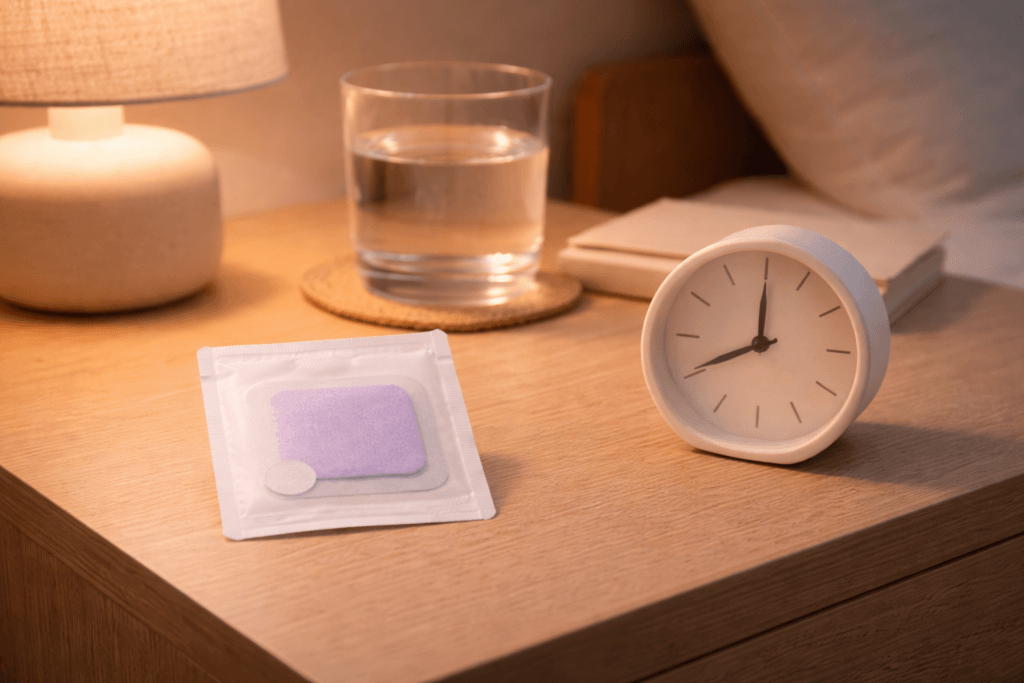
Common wear-time ranges (practical guidance)
Here are the most common ways people approach it:
Option A: Overnight (most common)
- apply before bed
- sleep with it
- remove after waking
This works well because it’s consistent and easy to remember.
Option B: Wind-down + early sleep (shorter wear time)
Some people prefer to apply during wind-down and remove earlier if:
- they’re sensitive to adhesives
- they toss and turn a lot
- they notice skin irritation
Option C: Test-and-adjust (best for sensitive skin)
If you’re unsure, start with a conservative approach:
- try it for a shorter window first
- check comfort and skin response
- extend wear time as tolerated
If you’re sensitive, this guide helps:
When should you apply it? (simple timing rule)
A practical routine is:
Apply 30–60 minutes before sleep
That gives you time to:
- settle your nervous system
- keep the routine consistent
- avoid rushing at the last second
If you want a full bedtime routine you can repeat:
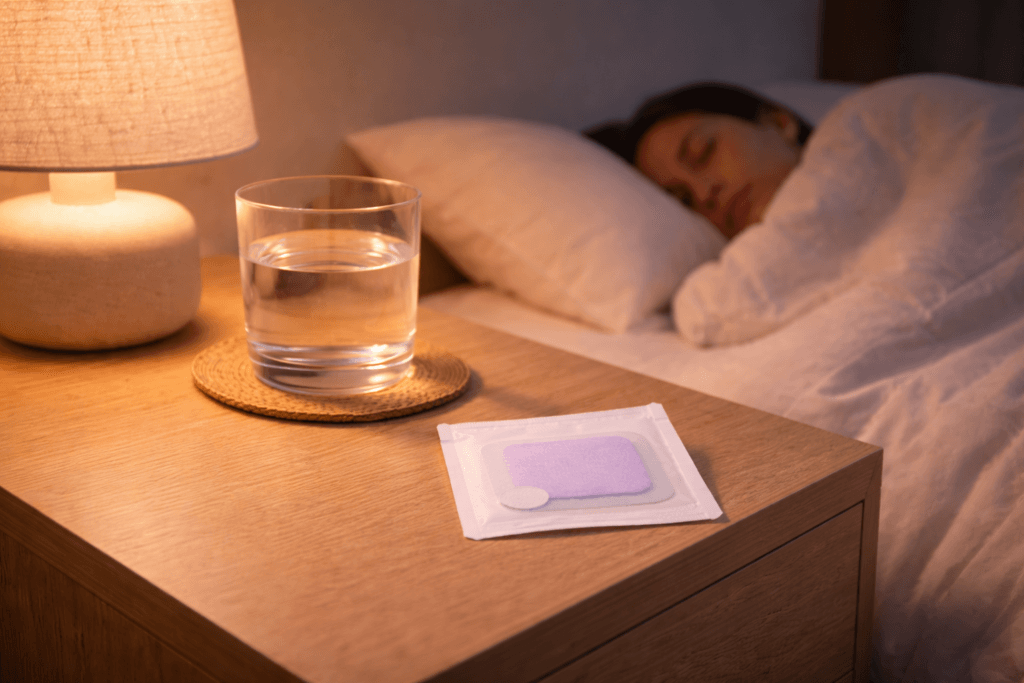
Removal tips (so it’s comfortable and skin-friendly)
1) Remove slowly (don’t rip it off)
Peel low and close to the skin, slowly.
2) Warm water helps
If it’s stubborn:
- remove after a shower
- or use warm water to loosen adhesive
3) Avoid aggressive scrubbing afterward
Pat dry and keep the area calm.
4) Rotate placement nightly
Rotating spots reduces irritation risk.
What to do if you wake up and it’s peeling
This happens sometimes — especially with sweat, friction, or tossing and turning.
- press the edge down if it’s minor
- if it’s uncomfortable, remove it
- next night: try a less friction-heavy placement and apply to clean, dry skin
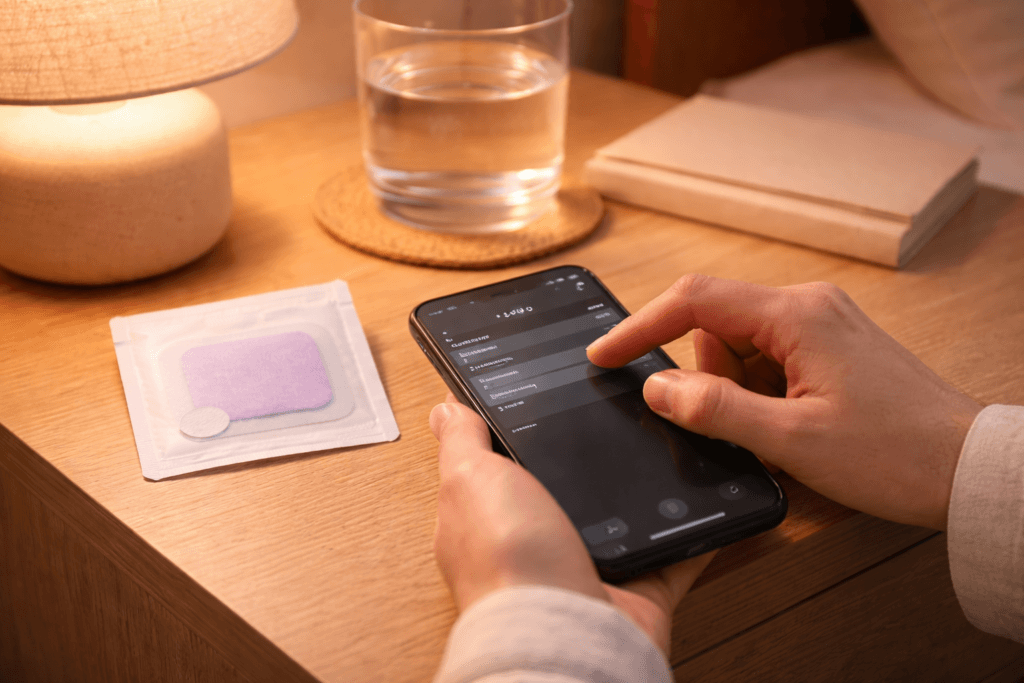
The 7-night tracker (so you can tell what’s changing)
Sleep varies night to night. Tracking helps you spot real trends.
For 7 nights, track:
- Time to fall asleep: fast / medium / long
- Wakeups: 0 / 1–2 / 3+
- Morning rating (1–10): ___
If your goal is “stay asleep,” the wake-ups metric matters most.
If your goal is “fall asleep faster,” focus on the first metric.
Common mistakes (and quick fixes)
Mistake #1: Judging off one night
Fix: track for 7 nights.
Mistake #2: Changing timing every night
Fix: keep a consistent apply window.
Mistake #3: Applying over lotion
Fix: clean, dry skin only.
Mistake #4: Using the same spot nightly
Fix: rotate placement.
If you want the simplest next step
- Learn the full routine: sleep-patch
- Build your beginner plan: start-here
- Shop: https://MyPatchWorks.com/product
Bottom line
Most sleep patches are worn overnight — but the best approach is:
- follow official product instructions
- apply consistently during wind-down
- remove gently
- rotate placement
- track 3 simple signals for 7 nights
That’s how you build a safe, repeatable routine and know what’s actually working (results vary).
Disclaimer: This content is for general educational purposes and is not medical advice. Results vary by person.