
One of the most common questions people ask after they discover patches is:
How many patches can you wear at once?
And right behind it:
- “Can I mix goals?”
- “Should I start with two or three?”
- “How do I know what’s actually working?”
This guide gives you simple stacking rules that keep things safe, consistent, and easy to track (results vary).
Disclaimer: This content is for general educational purposes and is not medical advice. Patches aren’t intended to diagnose, treat, cure, or prevent disease. Results vary by person. If you have medical conditions, are pregnant, or take medications, consult a healthcare professional.
Quick start (recommended)
- Not sure where to begin? Start Here →
- Calm routine anchor: Stress Relief Patch Hub →
- Night routine anchor: Sleep Patch Hub →
- Shop / Sample Pack: https://mypatchworks.com/pricing
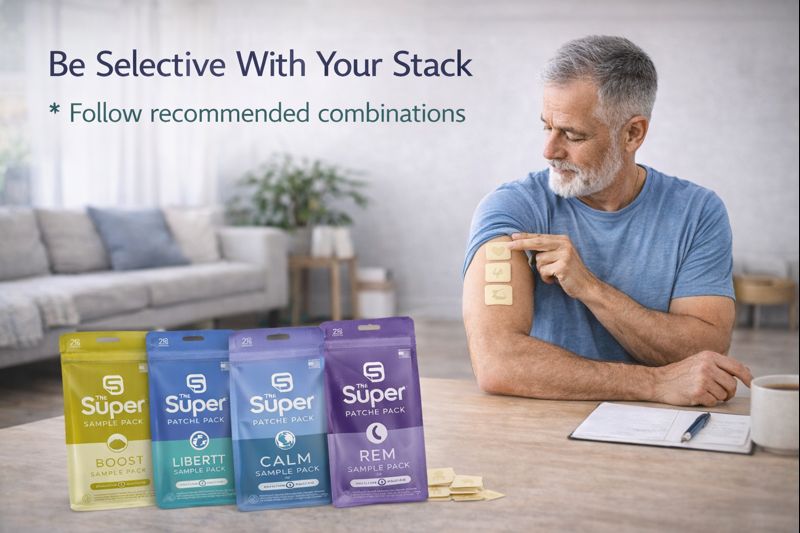
The short answer (simple stacking guideline)
For most beginners, the best approach is:
✅ Start with 1–2 patches (one goal or two goals)
✅ Run it consistently for 7 days
✅ Add a third only if you need it
Why?
Because stacking is most effective when you can tell what’s helping.
The “stacking ladder” (beginner → advanced)
Level 1: One goal
Best if you want the cleanest test.
Examples:
- sleep only
- stress only
- energy only
- focus only
This is the easiest way to know what’s changing.
Level 2: Two goals (recommended for most people)
This is the sweet spot: noticeable support without chaos.
Common high-success pairings:
- Stress + Sleep (calm down at night, recover better)
- Energy + Focus (momentum + attention)
- Comfort + Balance (movement support + steadiness)
- Recovery + Sleep (active days + better nights)
- Stress + Mood (heavy days)
If you want the simplest routine that works for many people:
Level 3: Three goals
Use three goals when:
- you’ve already tested your base stack
- you have a clear “third problem” that keeps showing up
- you’re tracking consistently and not changing things daily
Rule: add the third goal after your first 7-day test — not on day one.
A simple “Do / Don’t” stacking rule
✅ Do stack goals that support the same “system”Examples:
- stress + sleep (nervous system + recovery)
- energy + focus (daytime performance)
- recovery + sleep (training + restoration)
❌ Don’t stack 4–6 goals right awayThat usually creates:
- unclear results
- overwhelm
- inconsistent routines
The best way to stack (so you don’t guess)
Step 1 — Pick your base goal
Ask: “What matters most right now?”
If your day feels chaotic or you can’t shut off:
- start with stress support
If your nights are broken:
- start with sleep support
That’s why this combo is so common:
Step 2 — Run a clean 7-day test
Keep these consistent for a week:
- timing
- placement
- number of patches
Then evaluate.
Step 3 — Add ONE thing at a time
After 7 days, add:
- one additional goal or
- one supporting habit (wind-down routine, midday reset, hydration)
Not both at once.
What to track (so you know it’s working)
Track 3 simple signals per day:
If your stack includes Sleep
- fall asleep time: fast / medium / long
- wake-ups: 0 / 1–2 / 3+
- morning rating (1–10)
If your stack includes Stress
- tension (1–10)
- mental noise (1–10)
- recovery speed after stress: fast / medium / slow
If you’re stacking sleep + stress together, these 6 metrics tell you almost everything you need.
Sample pack: easiest way to test stacking
If you want to try a simple 2-goal routine without committing to full packs first:
Then run your 7-day test and track outcomes.
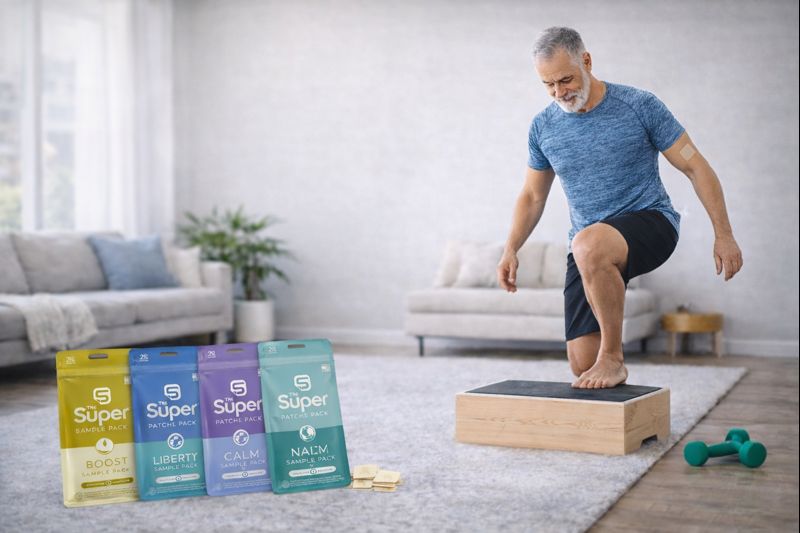
Common stacking mistakes (and quick fixes)
Mistake #1: Changing stacks every day
Fix: run the same routine for 7 days.
Mistake #2: Adding more because you’re impatient
Fix: track first. Trends matter more than day-one feelings.
Mistake #3: Ignoring your nights
Fix: if sleep is weak, your daytime goals feel harder.
Consider:
Bottom line
How many patches can you wear at once?
The best answer for most people is:
- start with 1–2 goals
- run a clean 7-day test
- add a third only if needed
- track outcomes so you’re not guessing
That’s how stacking stays simple, effective, and consistent.
Next steps
Disclaimer: This content is for general educational purposes and is not medical advice. Results vary by person.