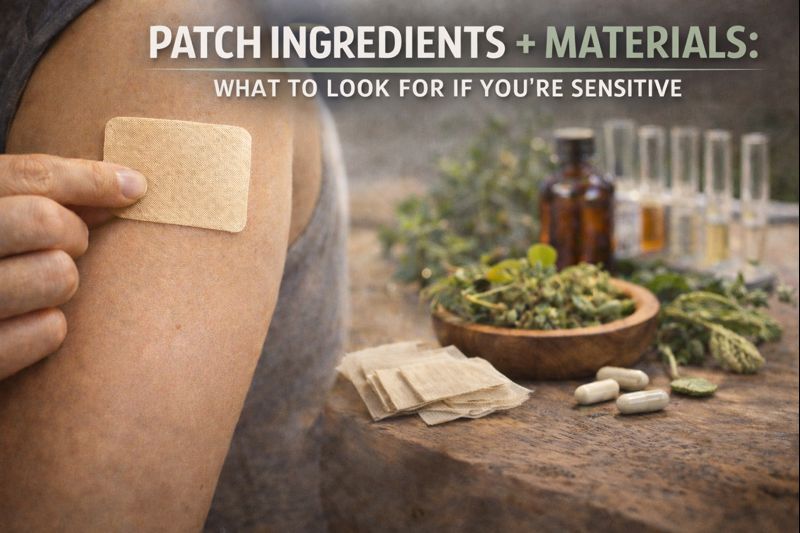
When people search “patch ingredients,” they’re usually asking one of two things:
- What is this made of? (materials, adhesive, backing)
- Will my skin react to it? (sensitivity, irritation, comfort)
And that’s a fair question — especially if you’ve had issues with:
- bandage adhesives
- athletic tape
- medical patches
- certain fabrics or latex
This guide explains what “ingredients/materials” can mean for patches, what to look for, and the simple checklist that helps you feel confident before buying.
Disclaimer: This content is for general educational purposes and is not medical advice. If you have known allergies or sensitive skin conditions, consult a healthcare professional before use. Results vary by person.
Quick start
- Not sure where to begin? Start Here →
- Sensitive skin tips: Sensitive Skin Guide →
- Want a low-commitment way to test? Sample Pack →
What “ingredients” can mean (and why it’s confusing)
With patches, “ingredients” may refer to:
- the adhesive (what sticks to skin)
- the backing material (fabric/film layer)
- any coatings/printing on the patch
- how the product is manufactured and packaged
People often assume “ingredients” always means something that absorbs into the body — but that’s not always how patches are designed or used.
So the safest, most practical approach is:
✅ focus on materials that touch your skin
✅ check for known irritants/allergens
✅ start with a small test if you’re sensitive

The sensitive-skin checklist (what to look for)
1) Check the product page for a clear materials description
Look for info about:
- adhesive type (especially if you’ve reacted to adhesives before)
- backing material
- latex-free mention (if that matters to you)
- “hypoallergenic” wording (helpful, but not a guarantee)
If a brand doesn’t explain materials at all, it’s harder to evaluate.
2) Know your personal “trigger list”
If you’ve reacted to these before, you’re more likely to be sensitive again:
- medical adhesive bandages
- kinesiology tape
- strong athletic tape
- fragrance-heavy lotions under adhesives
- shaving + adhesive contact (same day)
Your skin history is one of the best predictors.
3) Watch for friction + sweat issues (not just “ingredients”)
Sometimes irritation isn’t a chemical reaction — it’s mechanical.
The most common non-allergy causes are:
- placement under a waistband
- compression gear rubbing edges
- heavy sweating + heat
- repeatedly using the same exact placement spot
This is why placement and rotation matter as much as materials.
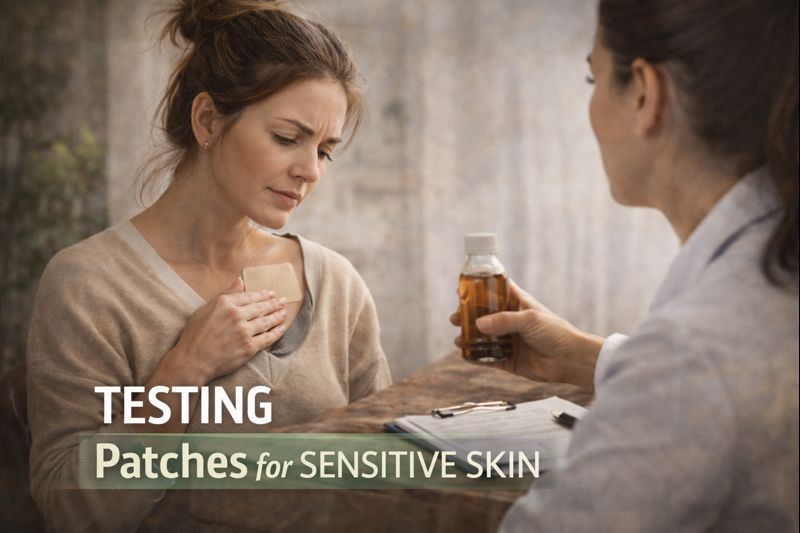
4) Plan a simple “wear test” if you’re very sensitive
If you’re cautious, a practical approach is:
- test during a normal day
- use clean, dry skin
- avoid lotion under it
- remove gently and monitor skin
And if you want a low-commitment way to test:
5) Know what “normal” looks like vs. a true reaction
Often normal (mild + temporary)
- slight redness outline
- mild itch that fades
- temporary mark after removal
More concerning (stop use and get advice)
- strong burning
- blistering
- swelling
- widespread rash
- symptoms beyond the patch area
If you see severe irritation, remove the patch and seek medical advice.
How to reduce irritation (even if materials are fine)
These best practices help most people, regardless of the patch:
Apply to clean, dry skin
Avoid lotion, oils, sunscreen.
Avoid high-friction spots
Skip waistbands, bra lines, tight seams.
Rotate placement
Don’t apply to the same exact spot daily.
Remove gently
Slow peel low and close to the skin; warm water can help.
For a full step-by-step approach:
FAQs (quick answers)
Do patch “ingredients” get absorbed?
It depends on the patch design and claims. Many people use patches as part of a routine without treating them like a medication. The safest approach is to rely on the brand’s official explanation and your own comfort testing.
If I’m allergic to bandage adhesive, can I still use patches?
Possibly, but you should be cautious:
- review materials info
- start with a small test
- discontinue if irritation is severe
Consider asking a healthcare professional if you have known allergies.
Does sensitive skin mean I can’t use patches?
Not necessarily.
Many people reduce irritation simply by:
- changing placement
- avoiding friction zones
- rotating areas
- removing gentlyResults vary.
Bottom line
When people search “patch ingredients,” they’re usually asking:
“Is this safe for my skin?”
The best way to feel confident is:
- check materials descriptions
- know your personal triggers
- avoid friction + sweat zones
- follow clean-skin best practices
- start with a low-commitment test if needed
Helpful next reads: