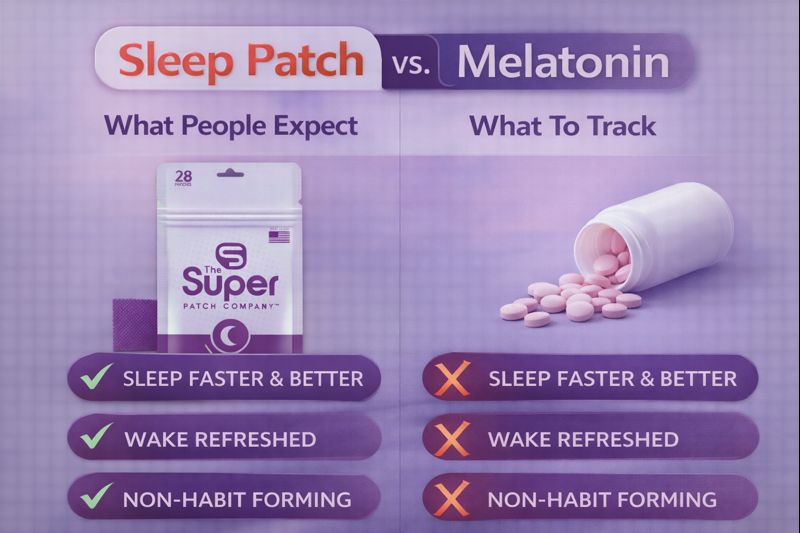
If you’ve tried melatonin before, you already know the vibe:
Some people love it.
Some people feel groggy.
Some people say it works… until it doesn’t.
So when people look into a sleep patch, they often ask the same question:
“Is this like melatonin?”
A better question is:
“What should I expect, and what should I track so I’m not guessing?”
This guide is a simple way to compare expectations and run a 7-night test.
Disclaimer: This content is for general educational purposes and is not medical advice. Patches aren’t intended to diagnose, treat, cure, or prevent disease. Results vary by person.
Quick start (recommended)
- Sleep Patch Hub →
- How It Works / FAQs →
- Start Here →
- Shop / Sample Pack: https://mypatchworks.com/pricing

First: melatonin and sleep support are not the same “goal”
Melatonin is commonly used with one expectation:
“Knock me out faster.”
But sleep quality is bigger than falling asleep.
Most people also want:
- fewer wakeups
- easier return to sleep if they wake up
- waking up feeling more restored (not like they got hit by a truck)
So the best comparison isn’t “which feels stronger.”
It’s which improves the outcomes you care about.
What people expect (and what’s realistic)
What people often expect from melatonin
- faster sleep onset
- “sedated” feeling
- sometimes: vivid dreams or morning fog (varies by person)
What people often expect from a sleep patch routine
- smoother downshift at bedtime
- fewer “wired-but-tired” nights
- improved sleep consistency over time (results vary)
The key word is routine.
Because almost any sleep tool works better when it’s consistent.
The best way to compare: track 3 outcomes for 7 nights
Don’t guess. Don’t “vibe check.” Track.
Each morning, write:
- Fall-asleep time: fast / medium / long
- Awakenings: 0 / 1–2 / 3+
- Morning rating (1–10): ___
Optional bonus metric:
- Grogginess (1–10): ___
This is the simplest way to decide what’s working for you — without getting pulled into opinions online.
How to run a clean comparison (without confusing the results)
If you want to compare fairly, don’t do this:
- melatonin + sleep patch + new supplement + new bedtime + no screens + new pillow
You won’t know what helped.
Instead, try one of these clean tests:
Option A: 7-night sleep patch routine test
Use the routine from:
Track the 3 outcomes above.
Option B: 7-night “current routine” baseline
Do nothing new — just track the same 3 outcomes for 7 nights.
Then compare baseline vs the sleep patch routine week.
That’s a more honest comparison than “how did I feel one night?”
What to do if stress is the real issue
A lot of people think they need sleep support, but what they really have is:
- stress
- tension
- mind racing
- emotional weight at bedtime
If you’re wired at night, a sleep routine often improves when you address stress first (or alongside sleep).
Next step:
FAQs (quick answers)
Is melatonin safe?
It depends on the person, dose, and situation. If you use melatonin regularly or have medical considerations, it’s smart to consult a healthcare professional.
Can I use a sleep patch and melatonin together?
This is a medical/supplement question, so it’s best to ask a clinician—especially if you’re taking other medications or have health conditions.
Why does tracking matter so much?
Because sleep is influenced by stress, caffeine timing, exercise, alcohol, room temperature, and life. Tracking helps you see trends instead of guessing.
Bottom line
The best comparison isn’t “sleep patch vs melatonin.”
It’s:
What did I do for 7 nights, and what changed?
Track:
- fall-asleep time
- awakenings
- morning rating
Then decide based on results — not hype.
Next steps
Disclaimer: This content is for general educational purposes and is not medical advice. Results vary by person.