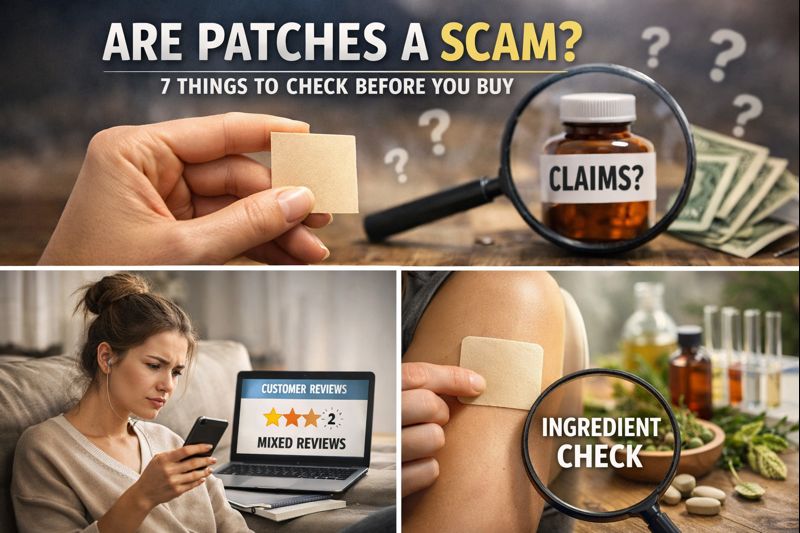
If you’re asking “are patches a scam?” you’re not being negative.
You’re being smart.
There are plenty of products online with:
- fake reviews
- unclear policies
- confusing claims
- bad support
- sketchy shipping
So before you spend money, here’s a simple trust checklist you can use to evaluate any patch brand — plus how to test safely so you’re not guessing.
Disclaimer: This content is for general educational purposes and is not medical advice. Patches aren’t intended to diagnose, treat, cure, or prevent disease. Results vary by person.
Quick start
- New to patches? Start Here →
- Want the lowest-risk way to try? Sample Pack →
- Returns overview: Return Policy + Guarantees →
- Shipping basics: Shipping Times + Tracking →
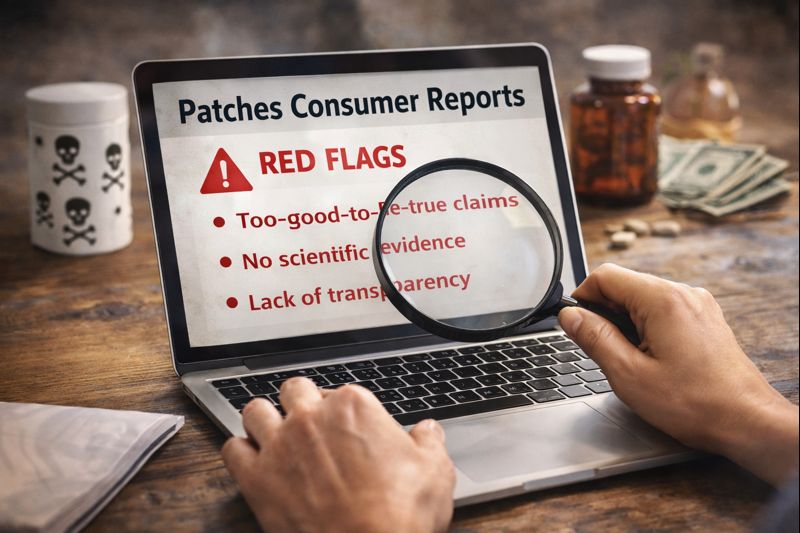
The 7-point trust checklist
1) Do they make unrealistic medical claims?
Be cautious of brands that promise:
- instant cures
- guaranteed results for everyone
- disease treatment claims
- “works for everything”
A trustworthy brand is clear that:
- results vary
- routines matter
- it’s not medical treatment
2) Is the policy clear (returns, exchanges, missing packages)?
Before buying, you should be able to find:
- return/exchange rules
- what happens if an item arrives damaged
- what happens if a package is lost or returned
- how to contact support
Use this page for peace of mind:
3) Is shipping + tracking transparent?
A legit checkout experience typically includes:
- an order confirmation email
- a tracking number
- a clear explanation of what “label created” means
- what to do if tracking stalls
If shipping is a big concern:
4) Do reviews sound real (or copy/paste)?
Look for reviews that include:
- a specific goal (sleep, stress, energy, comfort, focus, mood)
- timing/routine details
- what changed first (often subtle)
- how long they tested
Be cautious if reviews are:
- all vague (“amazing!” “life-changing!” with zero detail)
- suspiciously similar
- only five-star, no nuance
Pro tip: patterns across many reviews matter more than one dramatic story.
5) Do they explain how to test fairly?
A trustworthy brand encourages:
- consistent routine
- tracking outcomes
- adjusting one variable at a time
Because that’s how you reduce placebo effects and avoid guessing.
The simplest test method:
- pick one goal
- run a clean 7-day routine
- track 3 signals daily
(Results vary, but the process is fair.)
6) Is the brand easy to contact?
Before you buy, you should be able to find:
- a contact page
- a support email or form
- a reasonable response expectation (not “we never respond”)
If support is hidden or unreachable, that’s a red flag.
7) Do they offer a low-risk way to start?
A good brand helps you start without forcing a huge commitment.
That might be:
- a sample pack
- a beginner starter routine
- a clear “start here” path
If you want a low-commitment option:
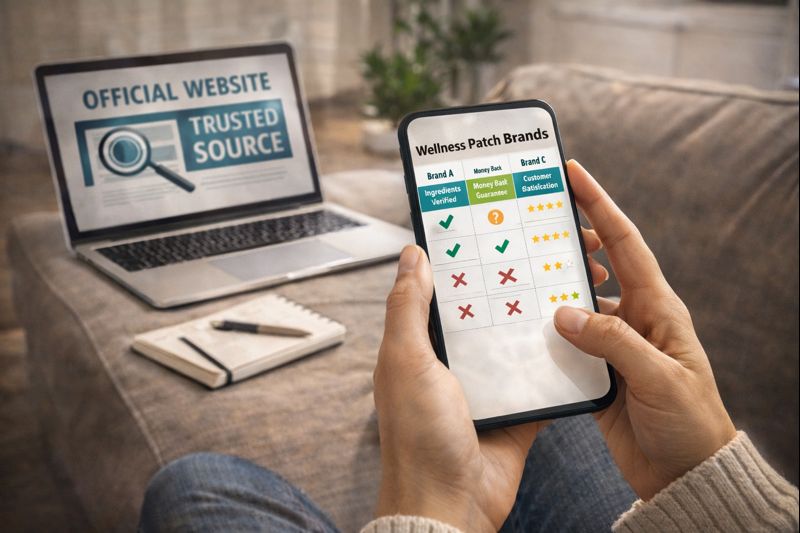
How to test without getting fooled (by hype or skepticism)
Whether you’re optimistic or skeptical, the clean test is the same:
The 7-day test
- choose ONE goal
- keep timing/placement consistent
- track 3 signals daily
- adjust one variable after 7 days
Examples of signals:
Sleep
- fall asleep time (fast/medium/long)
- wake-ups (0 / 1–2 / 3+)
- morning rating (1–10)
Stress/calm
- tension (1–10)
- mental noise (1–10)
- recovery speed (fast/medium/slow)
Energy
- 2–4 PM slump (1–10)
- recovery time (2/5/10+ minutes)
- afternoon focus (1–10)
This method works because it reduces guessing on both sides.
Bottom line
Are patches a scam?
Sometimes products online are sketchy — but you can protect yourself with a simple checklist:
- avoid unrealistic claims
- verify return + shipping transparency
- read reviews for specifics (not hype)
- make sure support is reachable
- start with a low-risk option
- test with a clean 7-day tracking method
If you want the simplest low-risk start:
Next steps
Disclaimer: This content is for general educational purposes and is not medical advice. Results vary by person.