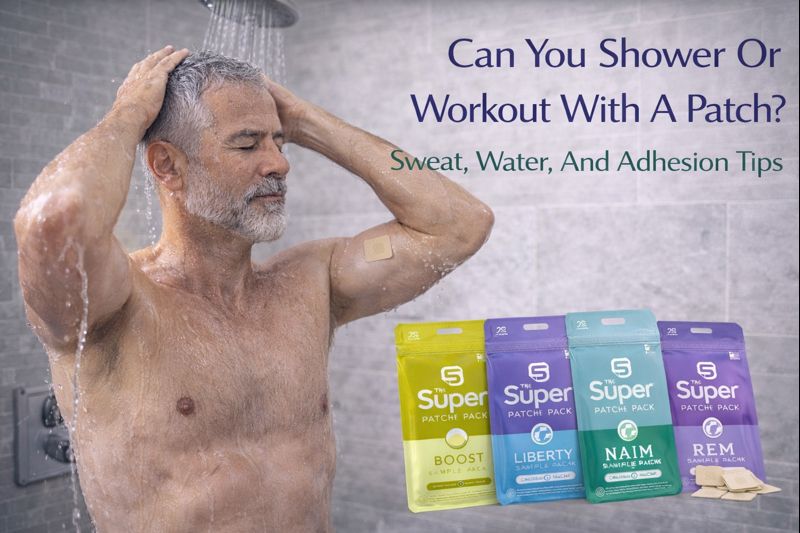
This is one of the most practical questions people ask:
Can you shower with a patch?
What about workouts and sweating?
If you’re building a routine, real life matters:
- showers
- gym sessions
- hot weather
- daily movement
- skin comfort
This guide covers the best practices for keeping a patch comfortable and secure through normal life — plus what to do if it starts peeling.
Disclaimer: This content is for general educational purposes and is not medical advice. Patches aren’t intended to diagnose, treat, cure, or prevent disease. Results vary by person.
Quick start
- Not sure what to start with? Start Here →
- Comfort goal: Pain Relief Patch Hub →
- Training goal: Recovery Patch Hub →
- Shop / Sample Pack: https://mypatchworks.com/pricing
The short answer
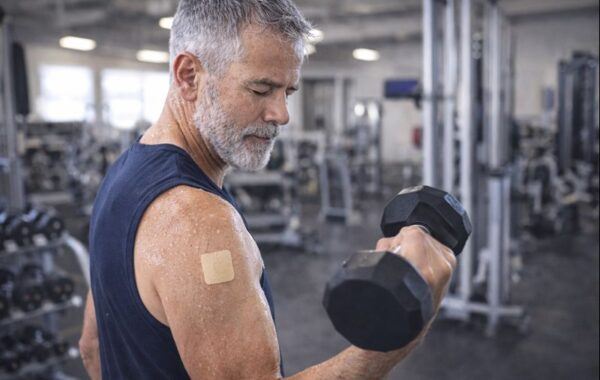
In most cases, yes — people do shower and work out while wearing patches.
But adhesion depends on:
- skin prep
- placement
- water + heat + friction
- sweat level
- clothing rubbing the edges
So if you want it to stay put, follow the tips below.
Best practices for showering, sweating, and staying comfortable
1) Apply to clean, dry skin (this matters most)
Before applying:
- wash the area with soap and water
- dry fully
- avoid applying over lotion, oil, sunscreen, or body butter
If you apply right after lotion, it’s more likely to peel early.
2) Choose the right placement (avoid friction zones)
The best “stay-put” spots are:
- flatter skin
- areas that don’t fold constantly
- areas that clothing doesn’t rub hard
Try to avoid:
- waistbands
- bra lines
- spots where you twist a lot
- high-friction seams
If your goal is comfort/movement, start here:
If your goal is training/recovery, start here:
3) Press and set it (don’t rush)
After applying:
- press firmly for 20–30 seconds
- smooth the edges
- wait a few minutes before heavy movement if possible
That “set time” can make a big difference.
4) Shower tips (so it stays on)
If you know you’re showering soon:
- apply after the shower when possible
- if you must shower with it on, try to avoid direct high-pressure spray on the edges
- pat dry after (don’t aggressively rub)
Hot water + rubbing = the most common reason edges lift.
5) Workout tips (sweat-proofing basics)
Before training:
- make sure skin is dry
- choose a lower-friction placement
- avoid areas where compression gear will roll the edges
After training:
- pat dry sweat
- check edges and press them down if needed
If you sweat heavily, placing it where clothing won’t “saw” the edges helps a lot.
What to do if a patch starts peeling
If an edge lifts slightly
- press it down for 20–30 seconds
- avoid rubbing that area with clothing
If it keeps peeling
Try these fixes next time:
- apply after shower, not before
- choose a less sweaty / less friction placement
- avoid lotion on that area
- allow a few minutes after applying before intense movement
Can you wear one in a pool or ocean?
Water exposure varies. For best results:
- apply after swimming when possible
- if you swim with it, avoid rubbing it with a towel — pat dry
- choose a secure placement away from friction
If you’re doing long water exposure (pool day, beach day), you may want to plan placement and timing more intentionally.
Skin comfort tips (especially for active people)
If you’re active daily, comfort matters.
Simple best practices:
- rotate placement areas
- avoid applying to irritated skin
- remove gently (slow peel, not a rip)
- if skin is sensitive, consider applying after shower and keeping the area lotion-free beforehand
Sample pack: easiest way to test in real life
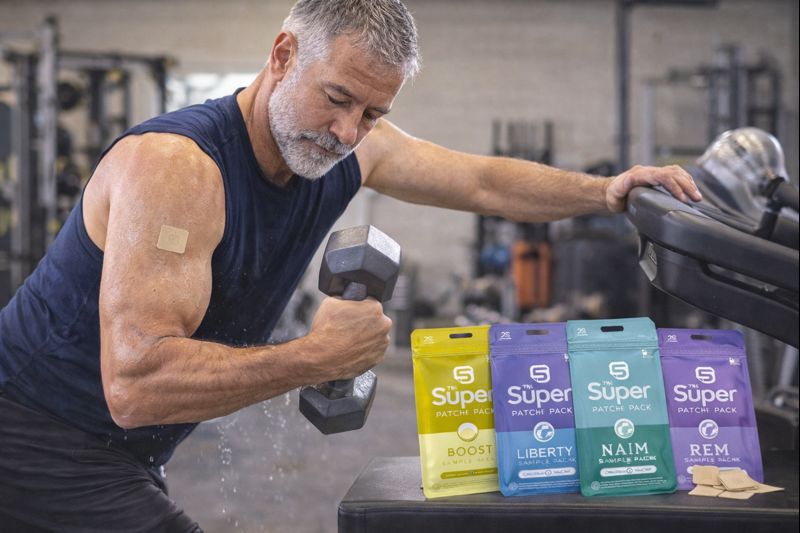
If you’re new and want to test how patches fit your daily routine:
Try them during:
- workdays
- workouts
- normal showers
- so you know what placement and timing works best for you.
Bottom line
Yes, most people can shower and work out with a patch — but adhesion depends on the basics:
- clean, dry skin
- low-friction placement
- press and set edges
- avoid heavy rubbing after shower/workout
- rotate placement for comfort
That’s how you keep it secure and make your routine easier to stick with.
Next steps
Disclaimer: This content is for general educational purposes and is not medical advice. Results vary by person.